
Baby Box vs Rustic
You can order the Rustic today; the Baby Box is preorder, so this is really a choice between a unit in hand and one you are waiting on.
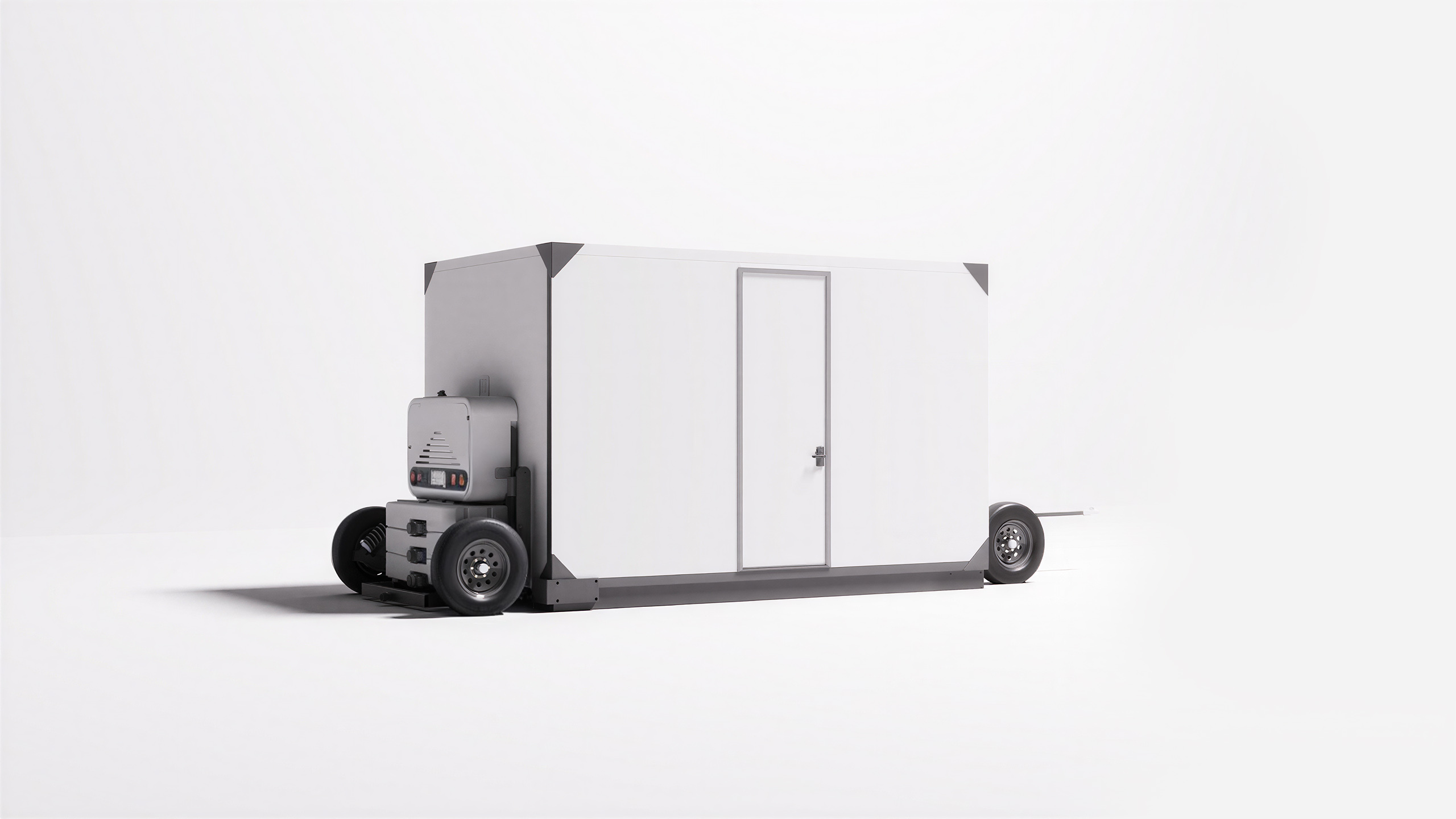
Baby Box
A small towable Boxabl (launched ~$19,999) with a wet bath and kitchenette, aimed at offices, studios and guest rooms rather than full dwellings. Several specs remain projected — treat folded dimensions, certification and warranty as unconfirmed.
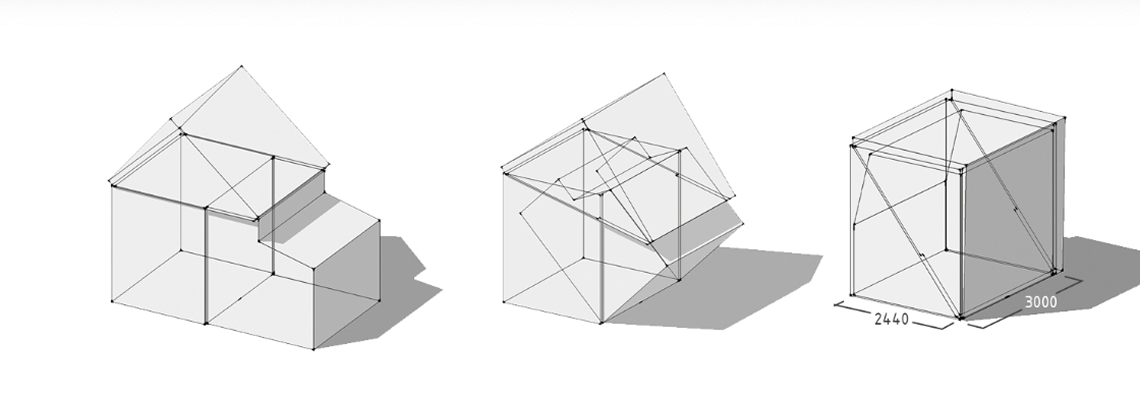
Rustic
The two-storey Brette Haus. A genuine second floor and a folded transport footprint that still fits standard freight — the closest thing in the category to a house rather than a unit. Bedroom count and price vary by configuration.
Which one wins
Baby Box is the lower delivered cost ($24,000 – $45,000 versus $95,000 – $160,000 — roughly $93,000 apart at the midpoint). Remember both figures are estimates that already fold in freight, site work and hookups, not base prices. Rustic gives you more deployed floor area at 506 sq ft — well over the Baby Box's 120 sq ft. Neither unit has a verified residential certification, so both are portable buildings on paper — fine for jobsite, studio or hospitality use, a permitting problem for a primary residence. Rustic is shipping now; Baby Box is preorder, so its numbers carry more uncertainty and its delivery timing is less committed. Some specifications on this page are projected rather than confirmed by the manufacturer — check the badges before relying on a number.
Full spec comparison
| Specification | Baby Box | Rustic |
|---|---|---|
| Maker | Boxabl | Brette Haus |
| Category | Foldable | Foldable |
| Status | Preorder | Shipping |
| Base priceProjected / Unconfirmed | $20,000 | $62,000 |
| Estimated delivered costProjected / Unconfirmed | $24,000 – $45,000 | $95,000 – $160,000 |
| Deployed areaProjected / Unconfirmed | 120 sq ft | 506 sq ft |
| Bedrooms | Studio / none | 2 |
| Bathrooms | 1 | 1 |
| Folded dimensionsProjected / Unconfirmed | Single-axle trailer, SUV-towable (~2,900 lb); published folded dimensions not confirmed | Folds flat for transport; exact folded dimensions not published |
| Deployed dimensionsProjected / Unconfirmed | About 14.75 ft × 10.9 ft, roughly 120 sq ft | About 48 m² over two levels (~506 sq ft) in the largest Rustic 30 build |
| Setup timeProjected / Unconfirmed | About an hour, no crew | Several hours with a crane — longer than the single-storey Compact |
| Foundation | Sits on its trailer (axle removable when stationary); off-grid capable with fresh/grey/black tanks and a battery. Typically RV-classed rather than a permitted dwelling. | Engineered piers or pads; no permanent foundation strictly required; relocatable hinge system; crane access required |
| Certifications | No certification verified | No certification verified |
| Regions served | United States (nationwide delivery claimed) | European Union; United Kingdom; North America (export order, at added cost) |
| Lead timeProjected / Unconfirmed | Pre-order; individual-buyer delivery timing not reliably confirmed | About 16–20 weeks plus freight |
| Financing | Boxabl cites ~$199–$399/mo financing. Too small and RV-classed for mortgage or manufactured-home lending; expect cash or unsecured credit. | Same import constraints as the Compact; land-secured lending is the usual route. |
| Warranty | Not published | 2-year manufacturer warranty; 50+ year lifespan claimed |
| Best for | ADU / backyard home, Jobsite & workforce, Hospitality & short stay | Primary residence, ADU / backyard home, Hospitality & short stay |
Who should buy the Baby Box
Consider the Baby Box only if its format genuinely fits your project and you can wait — it is preorder, so confirm price, specs and timing in writing before committing money the Rustic would let you spend today.
- • Lowest entry price in the Boxabl line (launched around $19,999)
- • Includes a wet bath and kitchenette despite the tiny footprint
- • Off-grid capable with onboard water tanks and a battery
Who should buy the Rustic
Buy the Rustic if you are a hospitality or short-stay operator where nightly rate, guest appeal and speed to revenue matter more than residential certification.
- • A genuine second floor, which very few foldables offer (sleeping across two levels, config-dependent)
- • High usable area per transport load in the foldable class
- • Cross-laminated timber build rather than a container conversion
Questions people ask about this comparison
- What is the Boxabl Baby Box?
- A small towable Boxabl launched around $19,999, with a wet bath and kitchenette in roughly 120 sq ft, aimed at offices, studios and guest rooms rather than full dwellings. It is SUV-towable and off-grid capable, but it is RV-classed rather than a permitted dwelling, and several specs — folded dimensions, certification and warranty — remain unconfirmed by Boxabl. Treat it as a preorder with projected numbers, not a shipping product you can pin down today.
- How much does a Boxabl actually cost delivered?
- The Casita's base price is around $60,000. A realistic delivered-and-installed figure in the US is $95,000 to $140,000 once you add freight, crane, site work, an engineered pad, utility connections and permits. On raw land with no services, the top of that range is the honest planning number. Anyone quoting you a turnkey Casita at the base price is leaving something out.
- What is the cheapest foldable home you can actually buy?
- Expandable container buildings sell in the US from roughly $20,000 on marketplaces, and brand-name US sellers like Chery Industrial now start closer to $30,000, sometimes available from stock. They are legitimate portable buildings — excellent jobsite offices, studios and farm structures. They are not certified dwellings in most counties, so if your plan is to live in one full-time on a permitted lot, the real cheapest option is a certified unit at two to three times that price.
- Are the expandable container homes on Amazon any good?
- As portable buildings, some are perfectly fine — a galvanized-steel frame with foam-panel walls that unfolds into 380–800 sq ft for a low price, useful as an office, studio, guest room or short-stay unit. As dwellings, they are a problem: none of the Amazon-sold units in our catalog (Feekercn, EROMMY) carries a verified residential certification, so most jurisdictions will not permit them as a residence, and warranty and support are retail-grade. Buy one for what it is, plan for import logistics and an electrician, and do not mistake a low sticker price for a low-cost home.
- Can I put a foldable home on raw land?
- Physically yes, but the site work is where the budget goes. Raw land with no services means you pay for access, clearing and grading, a foundation, and — the big one — utilities, where a septic system alone can exceed $20,000. On the cheapest units the site work frequently costs more than the building. Plan on roughly base price × 2.2 for an unserviced site, and confirm your parcel is zoned for a dwelling and can pass a septic/perc test before you buy either the land or the unit.
- Are foldable homes legal in California?
- Yes, if the unit carries the right certification. California permits factory-built housing with a state modular (HCD) insignia or a HUD label on a compliant foundation, and state ADU law is unusually friendly to accessory units. What California does not permit is an uncertified imported container building used as a dwelling. The certification label, not the folding mechanism, decides the answer.