
Compact vs The Nook
You can order the Compact today; the The Nook is preorder, so this is really a choice between a unit in hand and one you are waiting on.
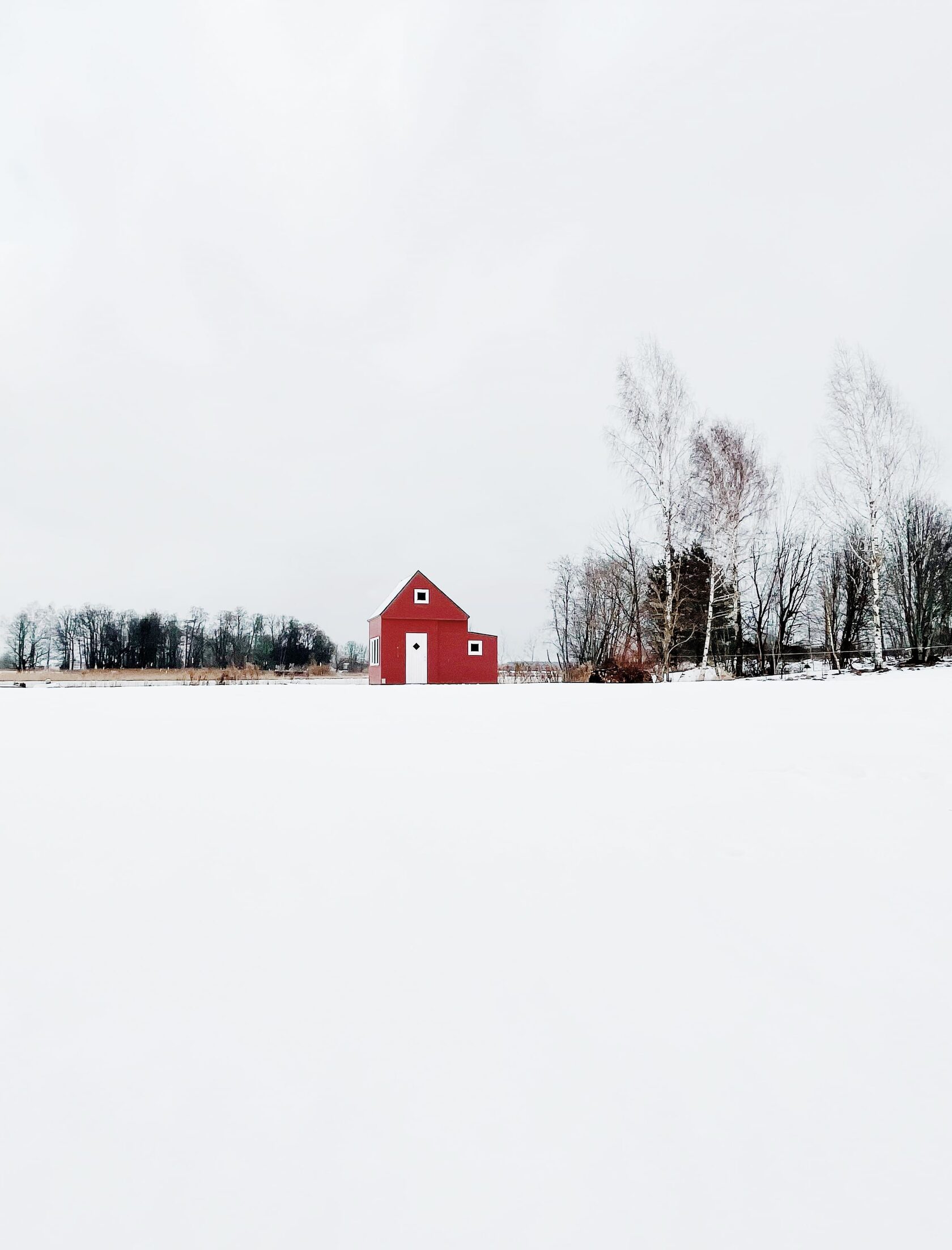
Compact
A hinged cross-laminated-timber cabin that folds flat and rotates open on site. Warmer and better finished than most of the category, with the import friction that comes with a European build. Base pricing is quote-based and varies widely by fit-out.
The Nook
The Nook is SEED Homes USA's mid-range Double-Fold model: 804 sq ft, 2BR/1BA, starting at $148,050. Two wall sections unfold on-site to deliver a home that 'arrives compact and opens wide' — creating the feeling of a full-size residence from a highway-legal transport package. The larger footprint and second bedroom make it the practical choice for families or buyers who need a genuine primary residence rather than an ADU. The same certification caveat as the Studio applies: CSA A277 manufacturing (Canadian), no US HUD or IRC-modular seal, so local permitting approval must be secured by the buyer.
Which one wins
Compact is the lower delivered cost ($70,000 – $120,000 versus $175,000 – $250,000 — roughly $118,000 apart at the midpoint). Remember both figures are estimates that already fold in freight, site work and hookups, not base prices. The Nook gives you more deployed floor area at 804 sq ft — well over the Compact's 291 sq ft. Neither unit has a verified residential certification, so both are portable buildings on paper — fine for jobsite, studio or hospitality use, a permitting problem for a primary residence. Compact is shipping now; The Nook is preorder, so its numbers carry more uncertainty and its delivery timing is less committed. Some specifications on this page are projected rather than confirmed by the manufacturer — check the badges before relying on a number.
Full spec comparison
| Specification | Compact | The Nook |
|---|---|---|
| Maker | Brette Haus | SEED Homes USA |
| Category | Foldable | Foldable |
| Status | Shipping | Preorder |
| Base priceProjected / Unconfirmed | $33,000 | $148,050 |
| Estimated delivered costProjected / Unconfirmed | $70,000 – $120,000 | $175,000 – $250,000 |
| Deployed areaProjected / Unconfirmed | 291 sq ft | 804 sq ft |
| Bedrooms | 1 | 2 |
| Bathrooms | 1 | 1 |
| Folded dimensionsProjected / Unconfirmed | Folds flat for container or flatbed transport; exact folded dimensions not published | Folds to compact highway-legal transport package (exact folded dimensions not published; double-fold allows each wing to fold flat for shipping) |
| Deployed dimensionsProjected / Unconfirmed | About 30 m² footprint (~291 sq ft), single storey, ~2.9 m height (Compact 27) | 30 ft L × 26 ft W × 10 ft H; 9 ft low eave height; 804 sq ft |
| Setup timeProjected / Unconfirmed | About 3 hours to unfold with a crane and a small crew | Double-Fold deployment: two wall sections unfold on-site to dramatically expand interior floor space. Exact setup time not published; contact SEED Homes for a site-specific estimate. |
| Foundation | Screw piles, piers or pads — no permanent foundation strictly required; the patented hinge is rated for repeated relocations, and crane access is needed on delivery day | Flexible foundation options per manufacturer; minimal site preparation required. Specific foundation type not mandated but larger footprint (30 × 26 ft) requires more site preparation than the Studio. Verify local zoning setbacks and foundation requirements before ordering. |
| Certifications | No certification verified | No certification verified |
| Regions served | European Union; United Kingdom; North America (export order, at added cost) | United States — ships from Medford, OR. Delivery costs and logistics confirmed site-by-site. Contact SEED Homes USA for coverage confirmation. |
| Lead timeProjected / Unconfirmed | About 8–12 weeks plus ocean freight to North America | Approximately 10–14 weeks from order confirmation (per Accio supplier directory, Oct 2026) |
| Financing | Imported units are hard to finance conventionally in the US. Most North American buyers pay cash or use a construction/renovation loan tied to the land. | No published financing product. No US HUD or IRC-modular certification, so conventional manufactured-home lending does not apply. Personal loans or construction-to-permanent loans are the most likely financing paths for buyers. |
| Warranty | 2-year manufacturer warranty on all elements; 50+ year lifespan claimed | 20-year exterior finish warranty (manufacturer-stated). Individual system warranties vary by component manufacturer. |
| Best for | ADU / backyard home, Hospitality & short stay, Rental investment | ADU / backyard home, Primary residence |
Who should buy the Compact
Buy the Compact if you are a hospitality or short-stay operator where nightly rate, guest appeal and speed to revenue matter more than residential certification.
- • Cross-laminated timber structure — quieter, warmer and better looking than steel boxes
- • Genuine hinged fold, not a container slide-out, with a hinge rated for many relocations
- • Sized variants (Compact 18/27) and a wider Rustic range including two-storey options
Who should buy the The Nook
Consider the The Nook only if its format genuinely fits your project and you can wait — it is preorder, so confirm price, specs and timing in writing before committing money the Compact would let you spend today.
- • Double-Fold design creates 804 sq ft from a compact transport package — genuinely spacious for a foldable home and competitive with standard modular ADUs
- • Vaulted ceilings with 9-foot low eave give the interior a much larger feel than the square footage suggests
- • Same 20-year exterior finish warranty and CSA A277-certified manufacturing as the rest of the SEED Homes lineup
Questions people ask about this comparison
- Which foldable home is best for a backyard ADU?
- Certification decides it. You need a HUD label or a state modular seal to place a unit as a permitted accessory dwelling in most jurisdictions, which narrows the field sharply — most expandables and imported cabins are uncertified. The Boxabl Casita, which carries a state modular seal in a growing list of states, is the standout realistic candidate; Brette Haus wins on finish quality if you can absorb the import freight and satisfy your county on certification yourself.
- How much does a Boxabl actually cost delivered?
- The Casita's base price is around $60,000. A realistic delivered-and-installed figure in the US is $95,000 to $140,000 once you add freight, crane, site work, an engineered pad, utility connections and permits. On raw land with no services, the top of that range is the honest planning number. Anyone quoting you a turnkey Casita at the base price is leaving something out.
- What is the cheapest foldable home you can actually buy?
- Expandable container buildings sell in the US from roughly $20,000 on marketplaces, and brand-name US sellers like Chery Industrial now start closer to $30,000, sometimes available from stock. They are legitimate portable buildings — excellent jobsite offices, studios and farm structures. They are not certified dwellings in most counties, so if your plan is to live in one full-time on a permitted lot, the real cheapest option is a certified unit at two to three times that price.
- Are the expandable container homes on Amazon any good?
- As portable buildings, some are perfectly fine — a galvanized-steel frame with foam-panel walls that unfolds into 380–800 sq ft for a low price, useful as an office, studio, guest room or short-stay unit. As dwellings, they are a problem: none of the Amazon-sold units in our catalog (Feekercn, EROMMY) carries a verified residential certification, so most jurisdictions will not permit them as a residence, and warranty and support are retail-grade. Buy one for what it is, plan for import logistics and an electrician, and do not mistake a low sticker price for a low-cost home.
- Can I put a foldable home on raw land?
- Physically yes, but the site work is where the budget goes. Raw land with no services means you pay for access, clearing and grading, a foundation, and — the big one — utilities, where a septic system alone can exceed $20,000. On the cheapest units the site work frequently costs more than the building. Plan on roughly base price × 2.2 for an unserviced site, and confirm your parcel is zoned for a dwelling and can pass a septic/perc test before you buy either the land or the unit.
- What is the Boxabl Baby Box?
- A small towable Boxabl launched around $19,999, with a wet bath and kitchenette in roughly 120 sq ft, aimed at offices, studios and guest rooms rather than full dwellings. It is SUV-towable and off-grid capable, but it is RV-classed rather than a permitted dwelling, and several specs — folded dimensions, certification and warranty — remain unconfirmed by Boxabl. Treat it as a preorder with projected numbers, not a shipping product you can pin down today.