
M.A.Di Single vs The Studio
Neither unit carries a decisive certification edge, so the real question is value: the M.A.Di Single lands far cheaper delivered, and the The Studio has to earn its premium on build, size or design.
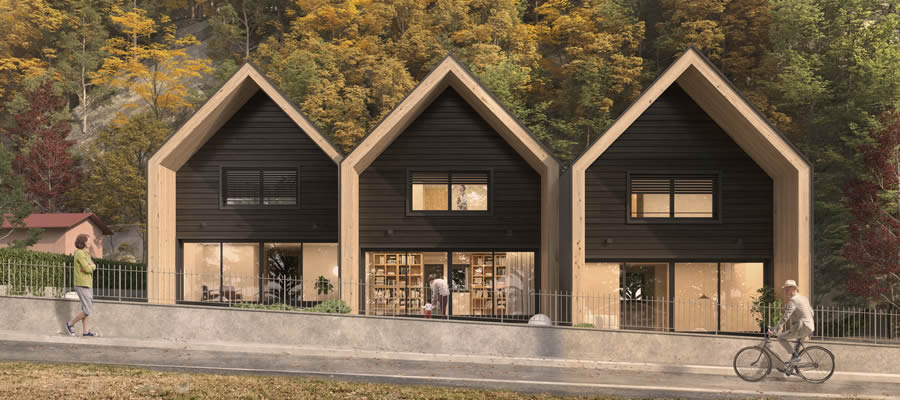
M.A.Di Single
A folding CLT A-frame that erects in about six hours — a distinct engineering approach with documented earthquake resistance. Striking, but the North American purchase path is the weak link and pricing dates from 2017–2019 press.
The Studio
The Studio is SEED Homes USA's entry-level foldable steel home: a Single-Fold, 420 sq ft 1BR/1BA that ships in a compact transport footprint and unfolds on site. At $99,750 starting, it sits above Chinese expandable containers in both price and build quality — industrial-strength steel, 20-year exterior finish warranty, off-grid capability, and CSA A277-certified manufacturing. The trade-off is no US HUD or state modular certification, meaning local permitting approval is the buyer's responsibility and is not guaranteed. The US entity (SEED Homes USA LLC, Medford OR) is an exclusive distributor of the Canadian SEED Homes brand; factory-to-US delivery adds logistics and setup costs that can push the all-in total to $120,000–$175,000.
Which one wins
M.A.Di Single is the lower delivered cost ($60,000 – $120,000 versus $120,000 – $175,000 — roughly $58,000 apart at the midpoint). Remember both figures are estimates that already fold in freight, site work and hookups, not base prices. The Studio gives you more deployed floor area at 420 sq ft against the M.A.Di Single's 291 sq ft. Neither unit has a verified residential certification, so both are portable buildings on paper — fine for jobsite, studio or hospitality use, a permitting problem for a primary residence. Some specifications on this page are projected rather than confirmed by the manufacturer — check the badges before relying on a number.
Full spec comparison
| Specification | M.A.Di Single | The Studio |
|---|---|---|
| Maker | M.A.Di Home | SEED Homes USA |
| Category | Foldable | Foldable |
| Status | Concept | Preorder |
| Base priceProjected / Unconfirmed | $33,000 | $99,750 |
| Estimated delivered costProjected / Unconfirmed | $60,000 – $120,000 | $120,000 – $175,000 |
| Deployed areaProjected / Unconfirmed | 291 sq ft | 420 sq ft |
| Bedrooms | 1 | 1 |
| Bathrooms | 1 | 1 |
| Folded dimensionsProjected / Unconfirmed | Ships flat-packed | Folds to a compact highway-legal width for transport (exact folded dimensions not published; SEED Homes notes the home folds for efficient shipping) |
| Deployed dimensionsProjected / Unconfirmed | About 27 m² (~291 sq ft) single module; Double and Triple configs scale larger | 25 ft L × 17 ft W × 10 ft H; 9 ft low eave height; 420 sq ft |
| Setup timeProjected / Unconfirmed | Roof pitches up into an A-frame with a crane and three people in about six hours | Single-Fold deployment: one wing unfolds on-site. Exact setup time not published by manufacturer; contact a SEED Homes advisor for site-specific estimate. |
| Foundation | Prepared base or piers | Flexible foundation options; manufacturer states minimal site preparation is required with compatibility for on-grid or off-grid setups. Specific foundation type not mandated but buyers must verify local jurisdiction requirements. |
| Certifications | No certification verified | No certification verified |
| Regions served | European Union; North America (availability unconfirmed) | United States — ships from Medford, OR. Delivery costs and logistics confirmed site-by-site. Contact SEED Homes USA for coverage confirmation. |
| Lead timeProjected / Unconfirmed | About 30–40 days from order in Europe | Approximately 10–14 weeks from order confirmation (per Accio supplier directory, Oct 2026) |
| Financing | Not published for North America. | No published financing product on site. FAQ notes buyers may pursue traditional mortgages, modular home loans, or land-and-home packages — but no US certification (HUD/IRC-modular) is held, so conventional manufactured-home lending paths do not apply. Personal loans are the most accessible route. |
| Warranty | Not published | 20-year exterior finish warranty (manufacturer-stated). Individual system warranties (solar, smart-home components) vary by manufacturer. |
| Best for | ADU / backyard home, Hospitality & short stay, Disaster relief, Primary residence | ADU / backyard home, Primary residence, Hospitality & short stay |
Who should buy the M.A.Di Single
Consider the M.A.Di Single only if its format genuinely fits your project and you can wait — it is concept, so confirm price, specs and timing in writing before committing money the The Studio would let you spend today.
- • Genuinely different engineering — a folding CLT A-frame, not a container or box
- • Documented anti-seismic performance
- • Credible ~6-hour crane erection
Who should buy the The Studio
Consider the The Studio only if its format genuinely fits your project and you can wait — it is preorder, so confirm price, specs and timing in writing before committing money the M.A.Di Single would let you spend today.
- • Published US starting price ($99,750) with no hidden deposit-then-negotiate model — unusual transparency for a foldable steel home at this spec level
- • CSA A277-certified manufacturing (Canadian factory-built housing standard) — higher process rigor than most uncertified Chinese exporters
- • 20-year exterior finish warranty; fire-resistant materials; engineered for hurricane-force winds, heavy snow loads, and hail
Questions people ask about this comparison
- How much does a Boxabl actually cost delivered?
- The Casita's base price is around $60,000. A realistic delivered-and-installed figure in the US is $95,000 to $140,000 once you add freight, crane, site work, an engineered pad, utility connections and permits. On raw land with no services, the top of that range is the honest planning number. Anyone quoting you a turnkey Casita at the base price is leaving something out.
- What is the cheapest foldable home you can actually buy?
- Expandable container buildings sell in the US from roughly $20,000 on marketplaces, and brand-name US sellers like Chery Industrial now start closer to $30,000, sometimes available from stock. They are legitimate portable buildings — excellent jobsite offices, studios and farm structures. They are not certified dwellings in most counties, so if your plan is to live in one full-time on a permitted lot, the real cheapest option is a certified unit at two to three times that price.
- Are the expandable container homes on Amazon any good?
- As portable buildings, some are perfectly fine — a galvanized-steel frame with foam-panel walls that unfolds into 380–800 sq ft for a low price, useful as an office, studio, guest room or short-stay unit. As dwellings, they are a problem: none of the Amazon-sold units in our catalog (Feekercn, EROMMY) carries a verified residential certification, so most jurisdictions will not permit them as a residence, and warranty and support are retail-grade. Buy one for what it is, plan for import logistics and an electrician, and do not mistake a low sticker price for a low-cost home.
- Can I put a foldable home on raw land?
- Physically yes, but the site work is where the budget goes. Raw land with no services means you pay for access, clearing and grading, a foundation, and — the big one — utilities, where a septic system alone can exceed $20,000. On the cheapest units the site work frequently costs more than the building. Plan on roughly base price × 2.2 for an unserviced site, and confirm your parcel is zoned for a dwelling and can pass a septic/perc test before you buy either the land or the unit.
- What is the Boxabl Baby Box?
- A small towable Boxabl launched around $19,999, with a wet bath and kitchenette in roughly 120 sq ft, aimed at offices, studios and guest rooms rather than full dwellings. It is SUV-towable and off-grid capable, but it is RV-classed rather than a permitted dwelling, and several specs — folded dimensions, certification and warranty — remain unconfirmed by Boxabl. Treat it as a preorder with projected numbers, not a shipping product you can pin down today.
- Are foldable homes legal in California?
- Yes, if the unit carries the right certification. California permits factory-built housing with a state modular (HCD) insignia or a HUD label on a compliant foundation, and state ADU law is unusually friendly to accessory units. What California does not permit is an uncertified imported container building used as a dwelling. The certification label, not the folding mechanism, decides the answer.